The Role of Jewelry in Persian Mythology and Folklore: How Ancient Myths Influence Jewelry Symbolism
Jewelry has long been intertwined with Persian mythology and folklore, serving not just as a form of adornment but also as a symbol of protection, power, and spirituality. In ancient Persia, jewelry carried profound symbolic meanings, often reflecting the values, myths, and legends of the time. Today, Persian jewelry designers continue to draw inspiration from these rich narratives, incorporating mythical motifs and ancient symbols into their creations.
In this post, we will explore how ancient Persian myths and folklore have influenced jewelry design, highlighting the recurring symbols, stories, and cultural significance that have shaped this timeless craft.
1. The Simurgh: The Mythical Bird of Wisdom and Rebirth
One of the most important symbols in Persian mythology is the Simurgh, a mythical bird often described as a benevolent, wise creature with the power to heal and revive. The Simurgh appears in several ancient texts, including Ferdowsi’s Shahnameh (The Book of Kings), where it plays a key role in healing the hero Rostam and guiding his descendants.

Symbolism in Jewelry
In Persian jewelry, the Simurgh is often depicted as a majestic bird with outstretched wings, symbolizing wisdom, rebirth, and divine protection. It is frequently used in pendants, brooches, and earrings, where it serves as a guardian figure, believed to offer spiritual guidance and protection to the wearer.
- Simurgh Pendants: These pendants often feature the Simurgh in flight, representing the soul’s journey toward wisdom and enlightenment. The intricate detailing of the feathers and wings highlights the importance of freedom, knowledge, and rebirth in Persian culture.
- Simurgh Brooches: These are sometimes worn as protective talismans, believed to keep the wearer safe from harm, reflecting the bird’s mythological role as a healer and protector.
Cultural Significance
The Simurgh remains a powerful symbol in Persian folklore, often associated with healing and the restoration of balance. Jewelry that incorporates the Simurgh is not only beautiful but also carries deep spiritual meaning, making it a popular motif in both traditional and contemporary designs.

2. The Faravahar: Zoroastrian Symbol of Divine Guidance
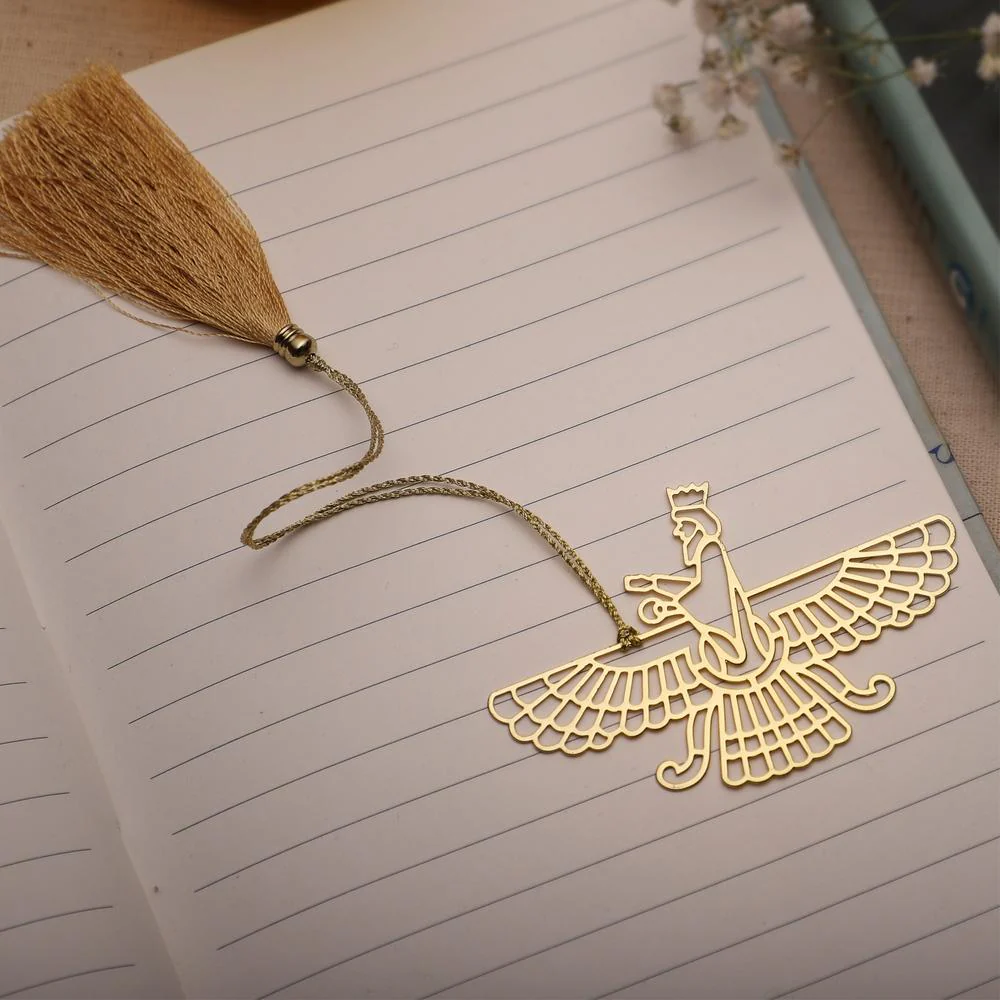
The Faravahar is one of the most iconic symbols of Zoroastrianism, the ancient religion of Persia, and remains an enduring representation of divine guidance, moral integrity, and the duality of life. Depicted as a winged figure with an outstretched hand, the Faravahar represents the human soul and its connection to the divine.
Symbolism in Jewelry
In Persian jewelry, the Faravahar is commonly seen in necklaces, rings, and bracelets, serving as a symbol of guidance and spiritual strength. The figure’s wings, which are often intricately crafted, represent good thoughts, good words, and good deeds—the core values of Zoroastrianism.
- Faravahar Pendants: These pendants are popular not only for their religious significance but also for their representation of personal empowerment. Wearing a Faravahar necklace is seen as a way to stay connected to one’s moral compass and spiritual path.
- Faravahar Rings: Rings featuring the Faravahar are often worn as symbols of self-discipline and moral responsibility, reminding the wearer of their connection to higher ideals.
Cultural Significance
The Faravahar is deeply ingrained in Persian culture and is one of the most recognized symbols of Zoroastrianism. Jewelry featuring the Faravahar carries a sense of heritage and spiritual integrity, making it a meaningful choice for those who wish to celebrate their Persian identity and ethical values.
3. The Lion and Sun: Strength and Royal Power
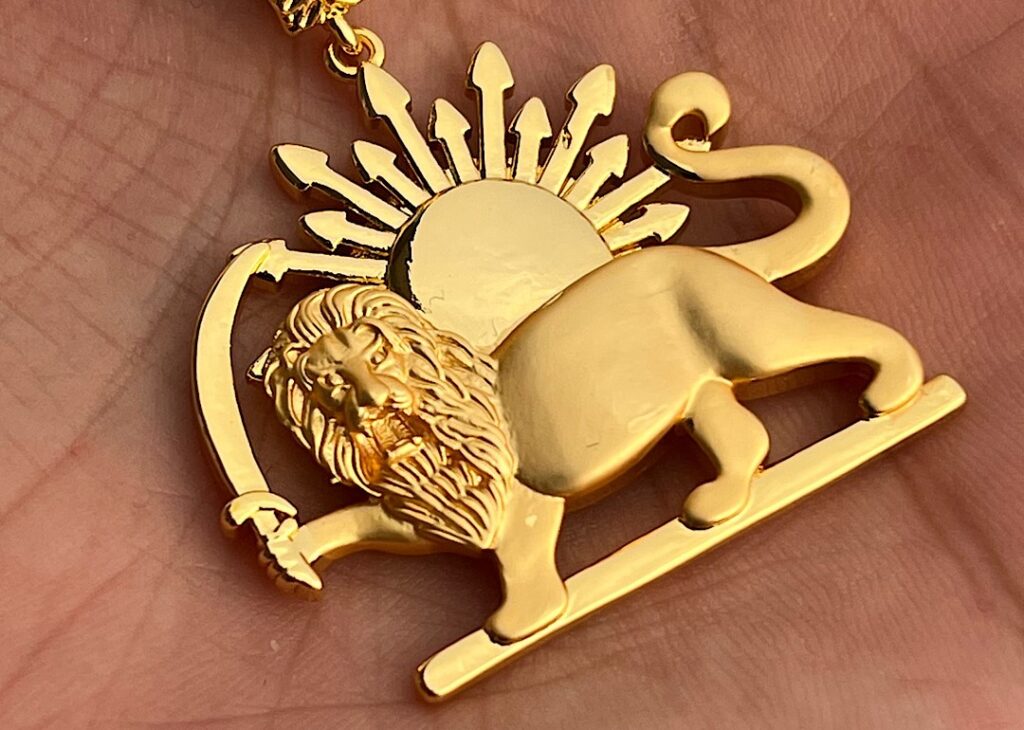
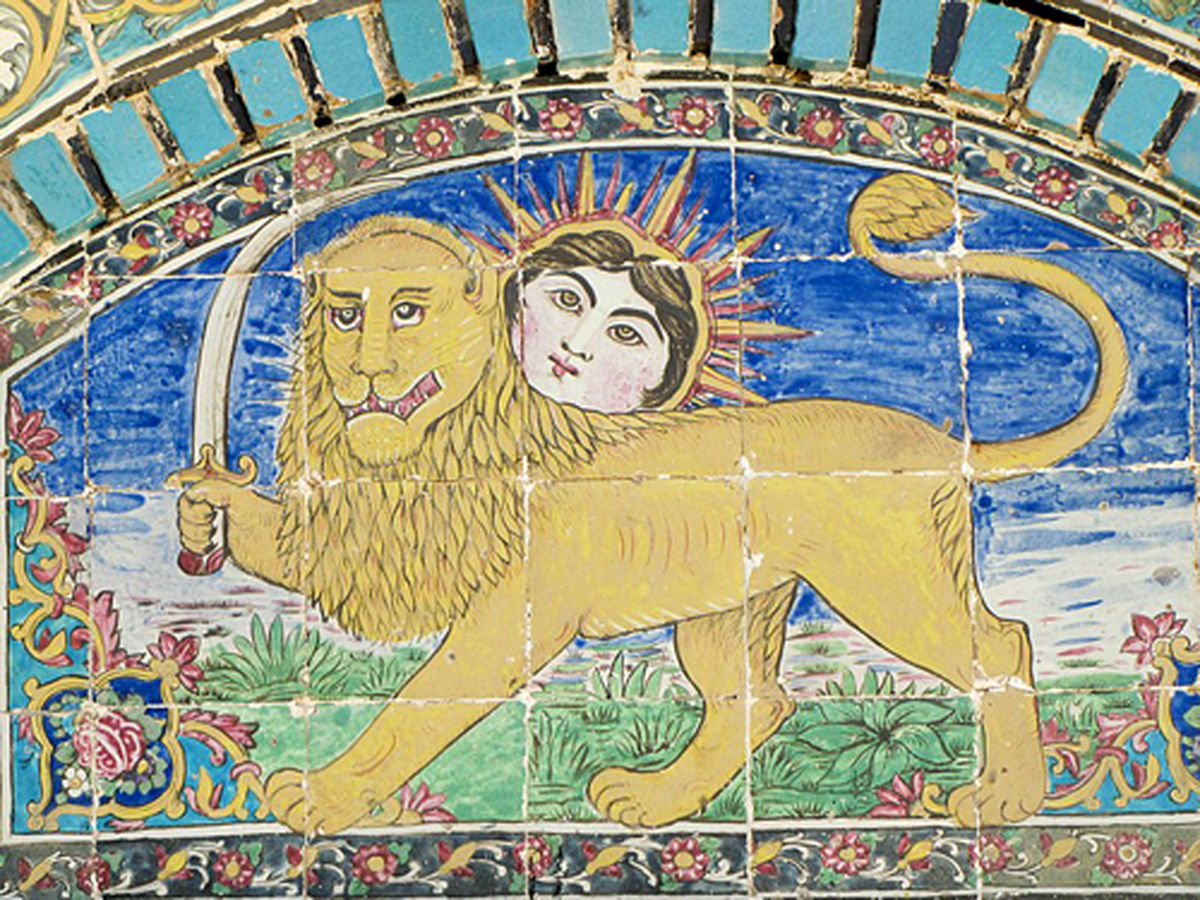
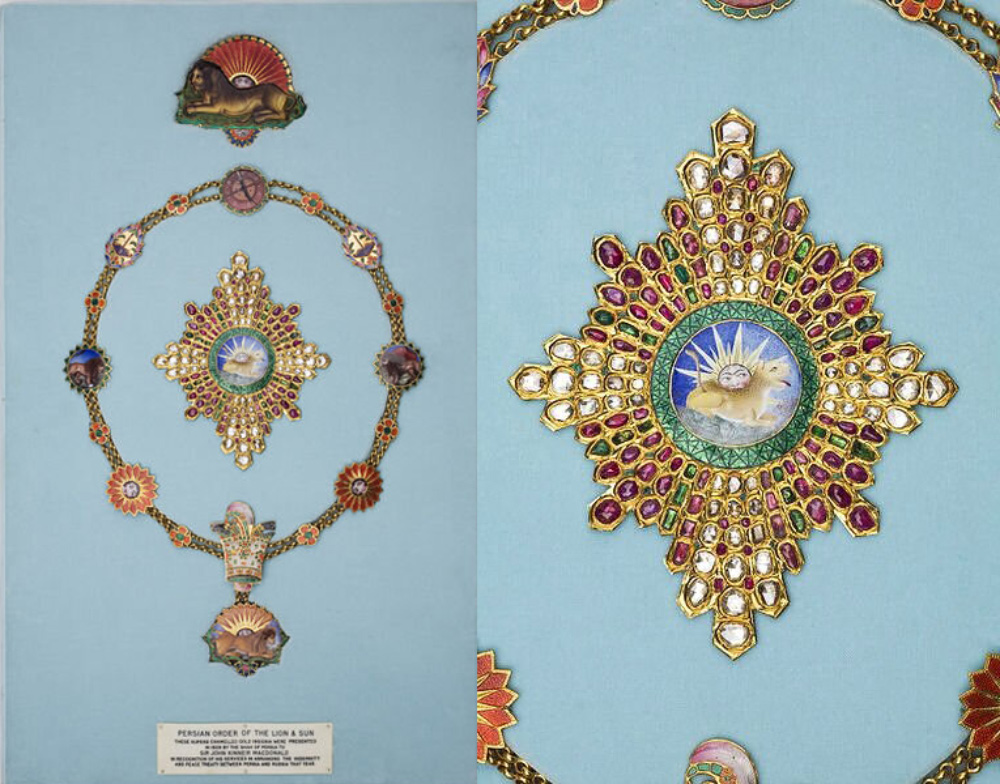
The lion and sun motif is one of the most ancient and enduring symbols in Persian culture, representing strength, courage, and royalty. The lion is often associated with the sun, symbolizing power and the cosmic order. This symbol has appeared throughout Persian history, including in the Shahnameh, where the lion is a protector of the empire and a representation of royal authority.
Symbolism in Jewelry
In Persian jewelry, the lion and sun symbol is often used to represent courage and nobility. It is commonly featured in rings, bracelets, and brooches, especially among those who wish to convey a sense of strength and leadership.
- Lion and Sun Brooches: These brooches are often worn as a representation of strength in adversity, making them popular among those who wish to channel the bravery and courage of the lion.
- Lion and Sun Rings: These rings are often associated with leadership and authority, serving as a reminder of the wearer’s inner strength and ability to overcome challenges.
Cultural Significance
The lion and sun have long been associated with Persian kingship and royal power, and their depiction in jewelry speaks to the wearer’s connection to strength, courage, and leadership. Today, this motif continues to be a powerful symbol of Iranian pride and heritage.
4. The Tree of Life: Symbol of Growth and Eternity
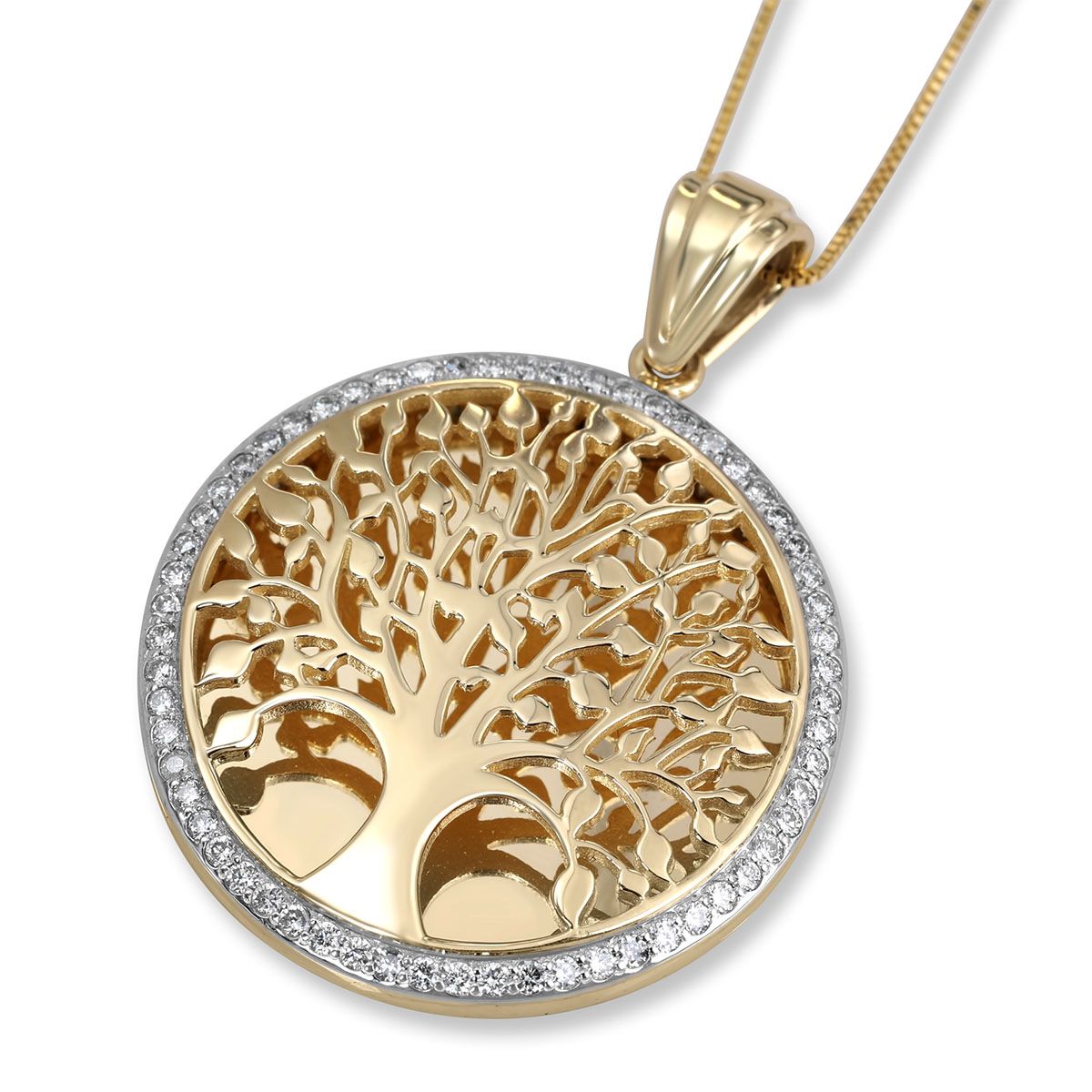
The tree of life is a recurring motif in Persian mythology, symbolizing growth, eternity, and the cycle of life. In ancient Persian cosmology, the tree of life was believed to connect the earthly realm to the spiritual world, representing the continuity of life and the balance between the material and divine.
Symbolism in Jewelry
In Persian jewelry, the Tree of Life is often depicted in pendants, earrings, and bracelets, where it serves as a symbol of eternal life, fertility, and spiritual growth.
- Tree of Life Pendants: These pendants are worn as symbols of strength and growth, representing the wearer’s connection to the natural world and their journey. The intricate branches of the tree often symbolize wisdom and the interconnectedness of all life.
- Tree of Life Earrings: Often worn during important ceremonies or celebrations, earrings featuring the tree of life symbolize renewal and new beginnings, making them popular gifts for weddings or milestones.
Cultural Significance
The Tree of Life carries a deep spiritual meaning in Persian culture, symbolizing the continuous cycle of life, death, and rebirth. Jewelry featuring this motif is often given as a gift to mark new beginnings or to symbolize long life and prosperity.
5. The Cypress Tree: Immortality and Resilience
The cypress tree has long been a symbol of immortality and resilience in Persian culture, appearing frequently in Persian gardens and poetry. The tree, which stands tall and green throughout the year, is often associated with eternal life and spiritual endurance. In Persian mythology, the cypress is also connected to the idea of resurrection and rebirth.
Symbolism in Jewelry
In Persian jewelry, the cypress tree is a symbol of strength, perseverance, and eternity. It is commonly featured in necklaces, bracelets, and rings, serving as a reminder of the wearer’s ability to overcome challenges and maintain spiritual strength.
- Cypress Tree Necklaces: These necklaces often depict the slender, upward-reaching branches of the cypress, symbolizing resilience and the ability to stand tall even in the face of hardship. They are often worn as a symbol of inner strength and spiritual fortitude.
- Cypress Tree Rings: Rings featuring the cypress tree are often given as gifts to mark important life events, symbolizing eternal life and spiritual growth. The ring serves as a constant reminder of the wearer’s connection to nature and resilience.
Cultural Significance
The cypress tree holds a special place in Persian culture, representing eternal life and the ability to endure despite challenges. Jewelry featuring the cypress tree is a popular choice for those who wish to celebrate their spiritual strength and resilience.
6. The Role of Gemstones in Persian Mythology
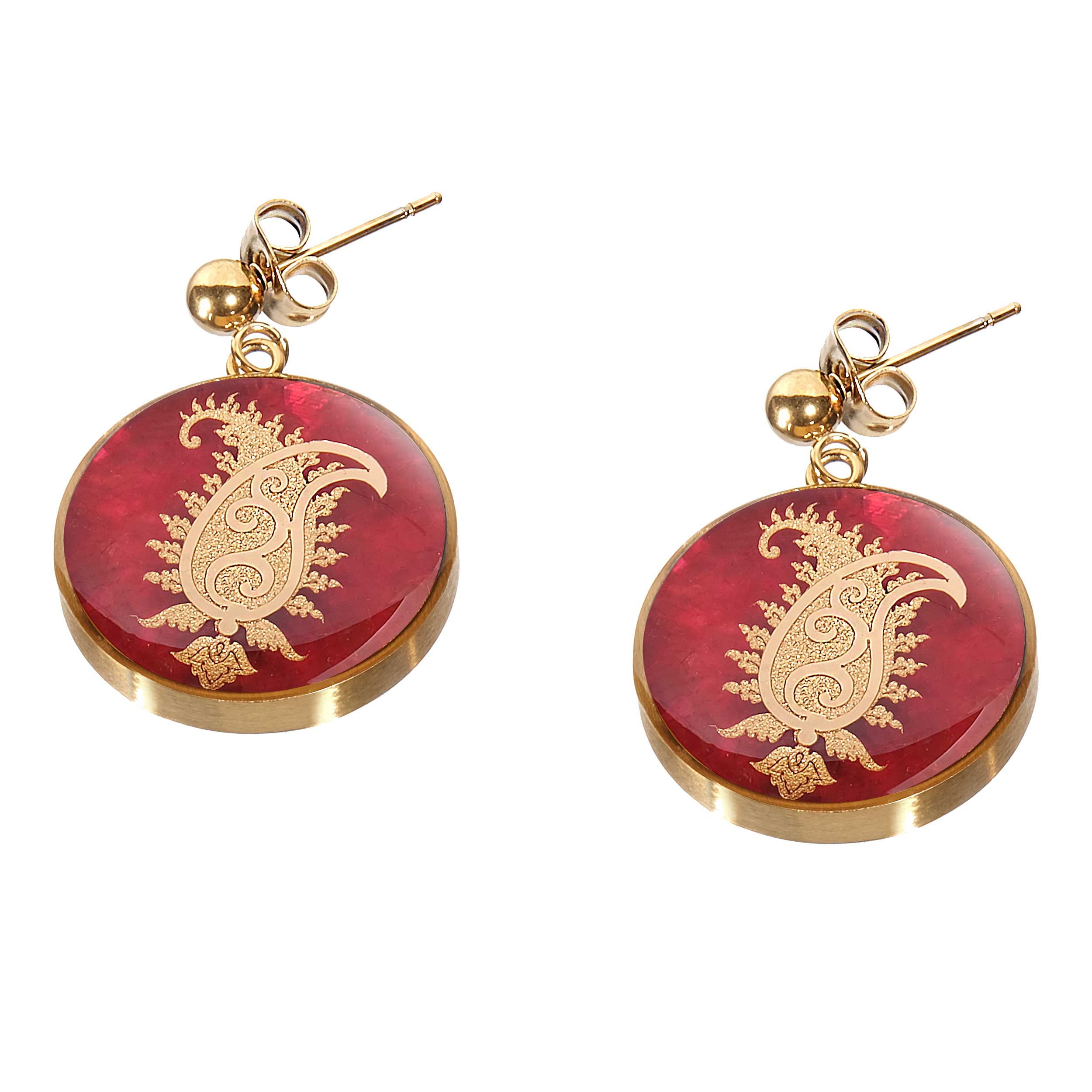
In addition to symbolic motifs, gemstones also play a significant role in Persian mythology and jewelry design. Stones like turquoise, agate, and lapis lazuli are not only prized for their beauty but are also believed to hold protective and healing powers.
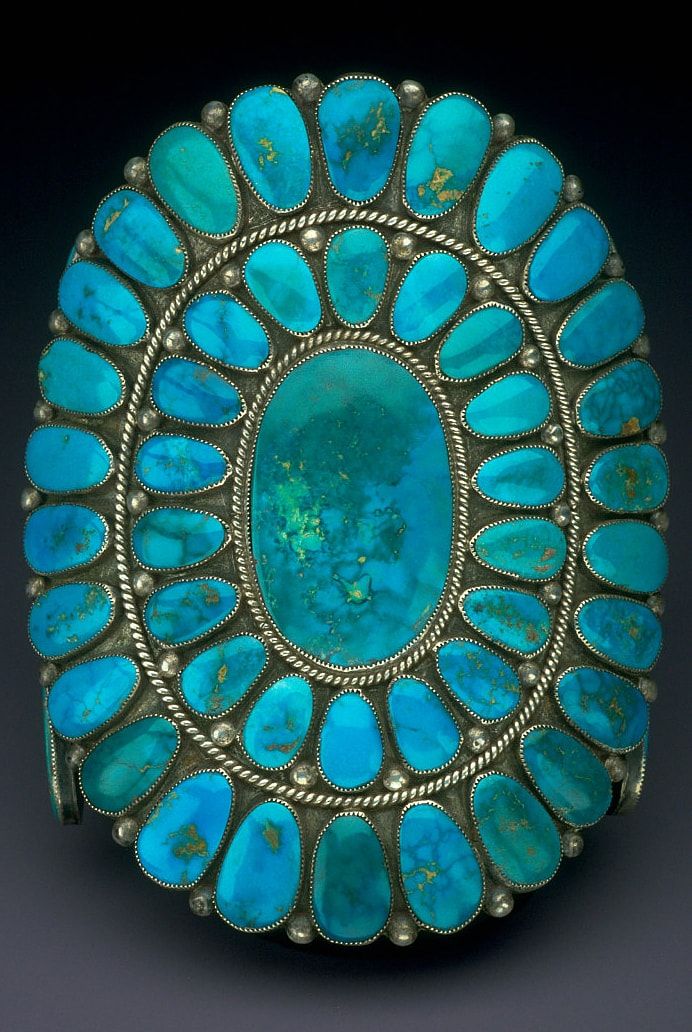
Turquoise (Firouzeh)
- Symbolism: Turquoise has been used in Persian jewelry for centuries and is believed to protect the wearer from harm and negative energy. In Persian folklore, turquoise is associated with spiritual protection and good fortune.
- Use in Jewelry: Turquoise is commonly used in rings, bracelets, and necklaces, often paired with silver. It is believed to bring peace and serenity to the wearer.
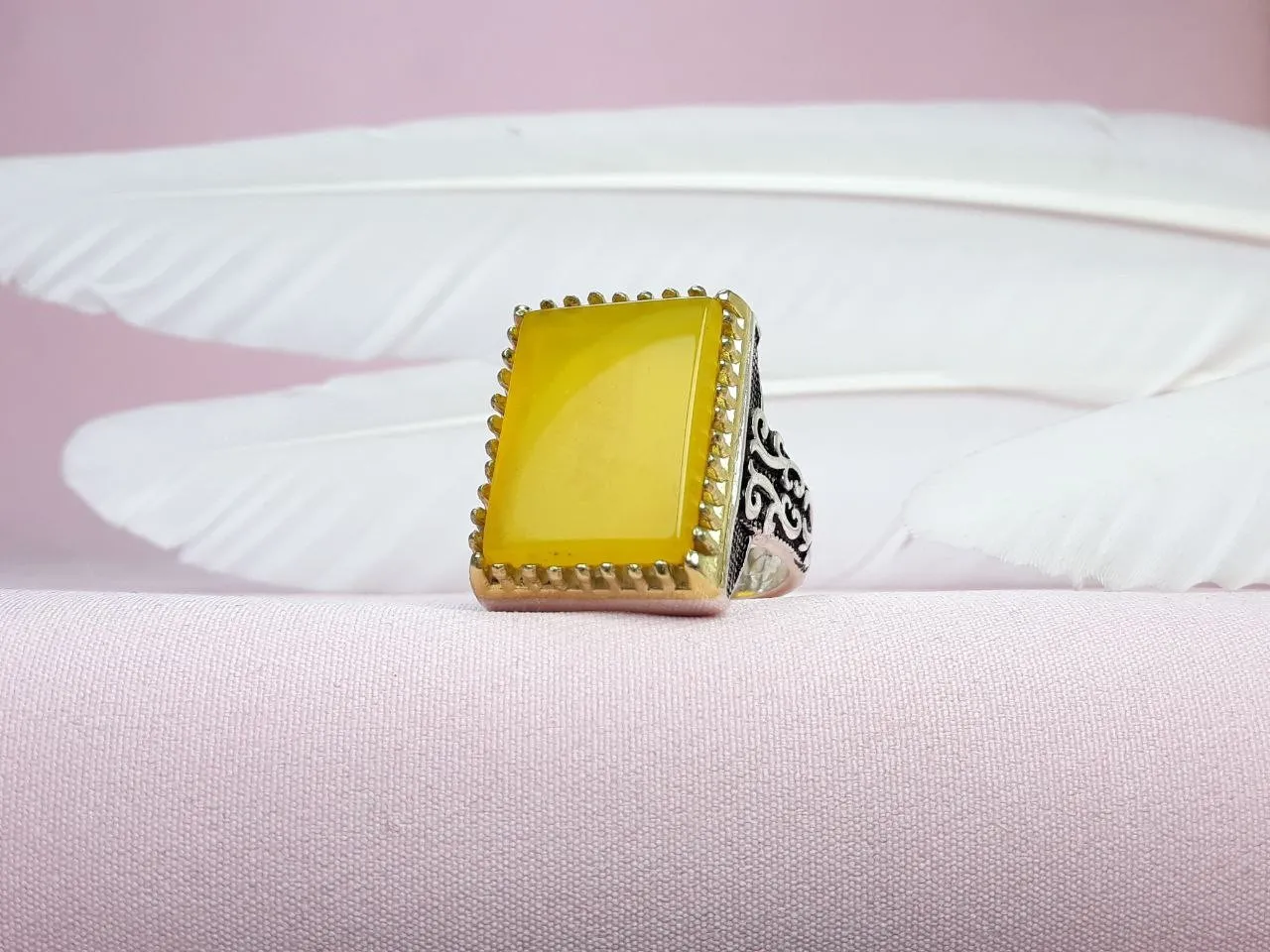
Agate (Aqeeq)
- Symbolism: Agate is considered a stone of strength and stability in Persian culture. It is believed to bring courage and balance to those who wear it, making it a popular stone for warriors and leaders in ancient times.
- Use in Jewelry: Agate is often used in rings and amulets, where it serves as a protective charm.
Conclusion: Myth and Meaning in Persian Jewelry
Persian mythology and folklore have had a profound influence on the world of jewelry design, with ancient symbols like the Simurgh, Faravahar, and cypress tree continuing to inspire modern artisans. These motifs carry deep meanings, reflecting themes of wisdom, protection, resilience, and spiritual growth, making Persian jewelry not only beautiful but also rich in cultural significance.
At LetsGoYelo, we offer a curated collection of Persian jewelry that celebrates these timeless myths and stories. Explore our range of handcrafted pieces and discover how ancient Persian symbolism can add depth and meaning to your collection.