
The Role of Amulets and Talismans in Iranian Jewelry: History and Spiritual Significance
For centuries, amulets and talismans have played an integral role in Iranian jewelry, offering more than just aesthetic beauty. These symbolic objects, often worn as jewelry, carry deep spiritual significance, believed to provide protection, bring good fortune, and ward off evil spirits. Rooted in ancient Persian traditions and Islamic beliefs, amulets and talismans are a vital aspect of Persian culture, reflecting the people’s connection to spirituality, mythology, and superstition.
In this article, we explore the history of amulets and talismans in Persian jewelry, the spiritual meanings behind these symbols, and how they have evolved in modern Iranian design while retaining their cultural significance.
1. The Historical Origins of Amulets and Talismans in Persian Culture
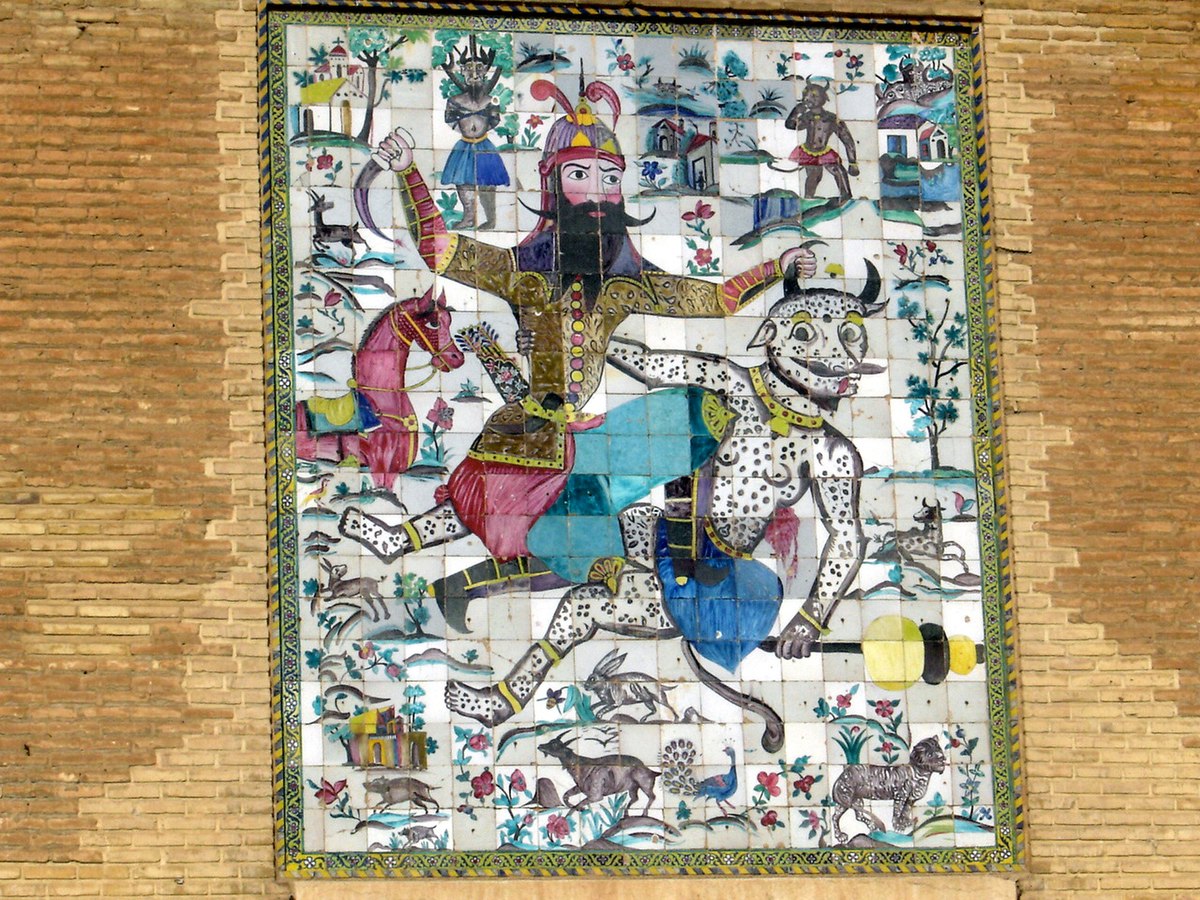
The use of amulets and talismans in Persian culture dates back thousands of years, with influences from Zoroastrianism, ancient Persian mythology, and later Islamic beliefs. In ancient Persia, amulets were believed to offer spiritual protection and act as a barrier against negative forces, including the evil eye, malevolent spirits, and bad luck. These protective charms were often incorporated into personal jewelry, such as rings, necklaces, and bracelets.
Zoroastrian Influence on Amulets
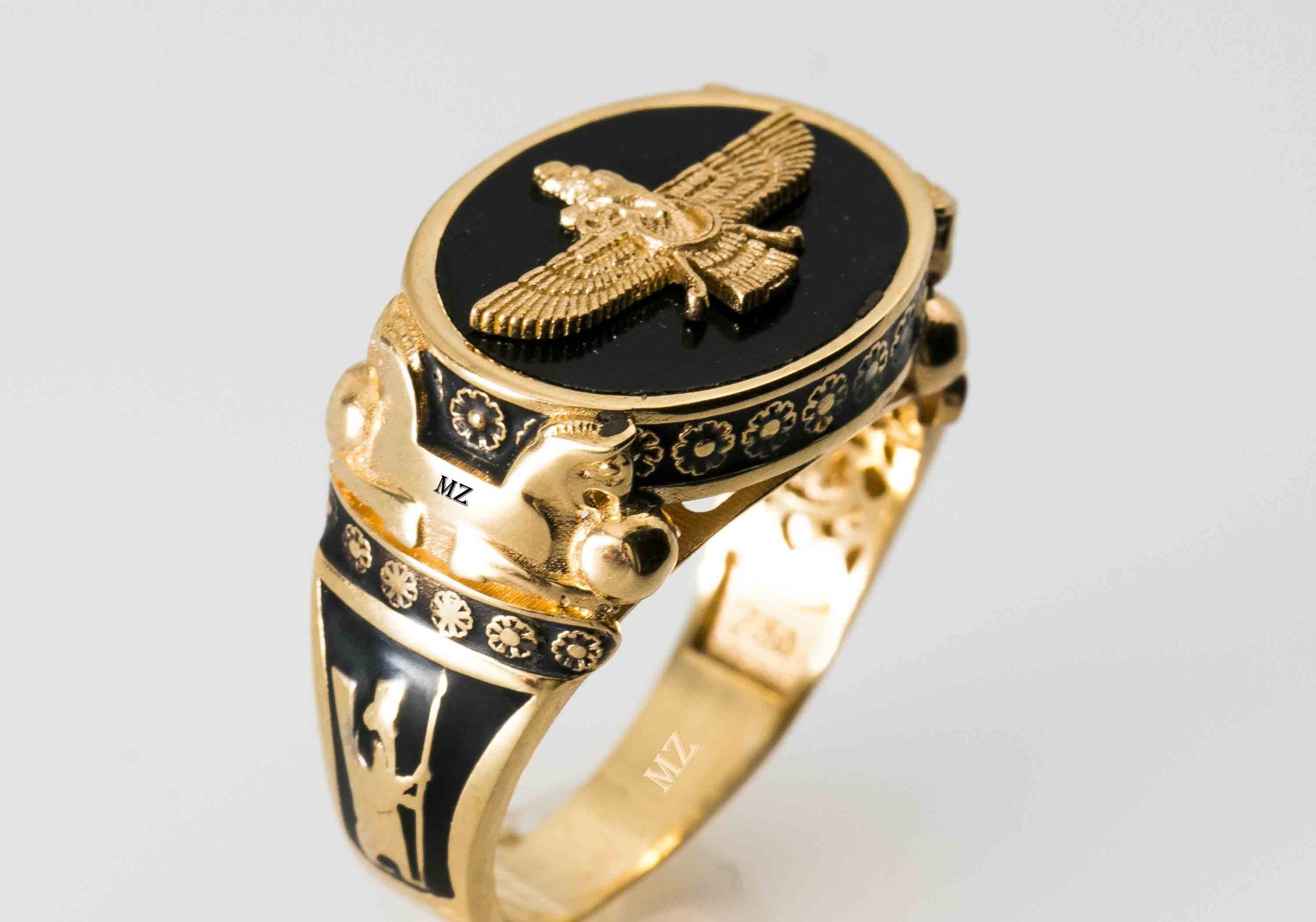
In Zoroastrianism, the ancient religion of Persia, the belief in good and evil forces played a central role. Amulets were often used to invoke Ahura Mazda, the supreme god, for protection and guidance. Symbols such as the Faravahar (a Zoroastrian emblem of divine guidance) were frequently used as amulets to safeguard individuals from evil forces and provide spiritual strength.
- Faravahar Amulets: The Faravahar symbol, representing the eternal soul and divine guidance, is one of the most recognizable Zoroastrian amulets. Worn in necklaces or pendants, the Faravahar is believed to provide spiritual protection and serve as a reminder to live a righteous and moral life.
Amulets in Islamic Persia
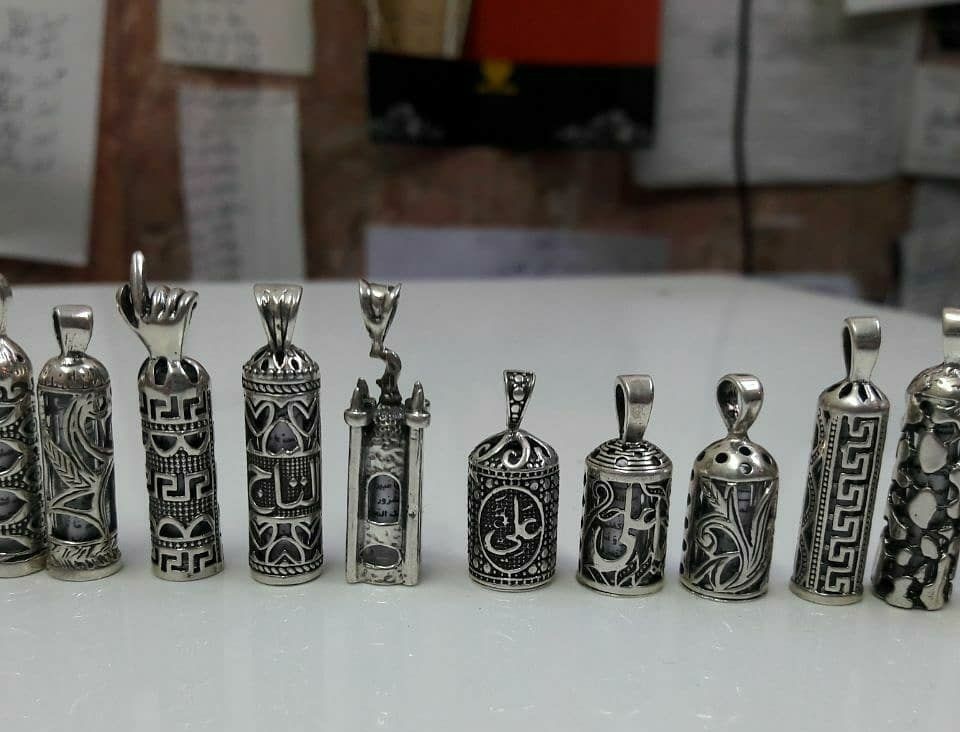
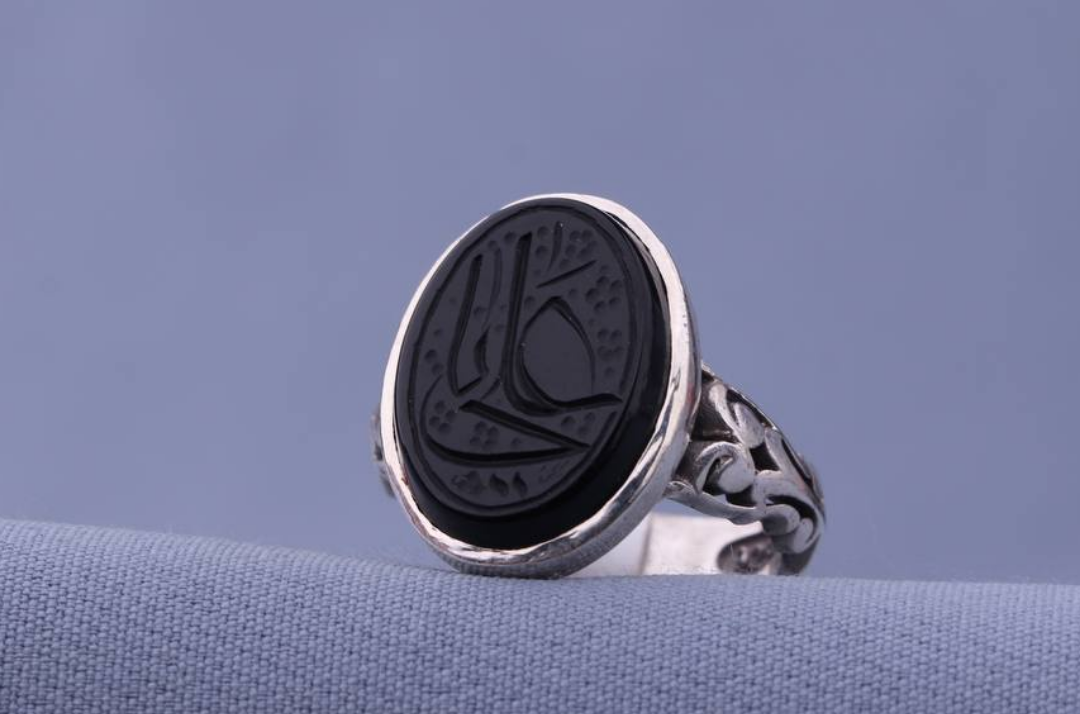
With the advent of Islam in Persia, new spiritual symbols were introduced into the culture. Islamic amulets often featured Quranic verses, Arabic calligraphy, and religious symbols believed to invoke divine protection and blessings.
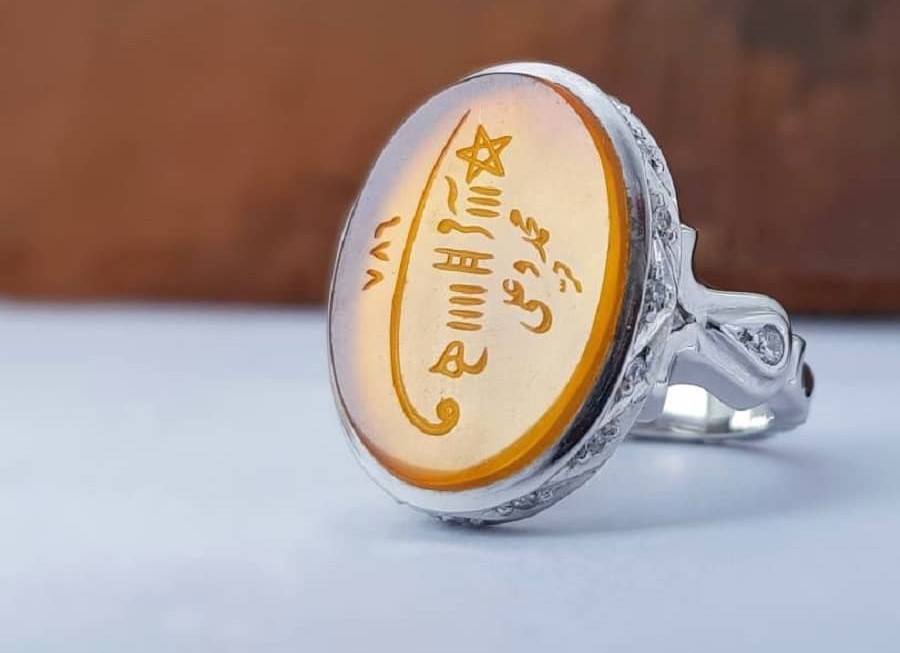
- Names of Allah and Quranic Verses: Jewelry featuring Quranic inscriptions or the 99 names of Allah became popular as amulets to ward off evil and bring spiritual protection. These talismans are often engraved onto rings, pendants, or bracelets, offering the wearer a direct connection to their faith.
2. Spiritual and Protective Meanings of Amulets in Iranian Jewelry
Amulets and talismans in Iranian jewelry are often imbued with spiritual meanings, serving as protective devices against evil, misfortune, and illness. Each amulet carries a specific symbolic significance, depending on the motif or inscription it bears. The belief in the evil eye, known as Cheshm Zakhm in Persian, is one of the most common reasons for wearing amulets in Iran.
Protection from the Evil Eye (چشم زخم)
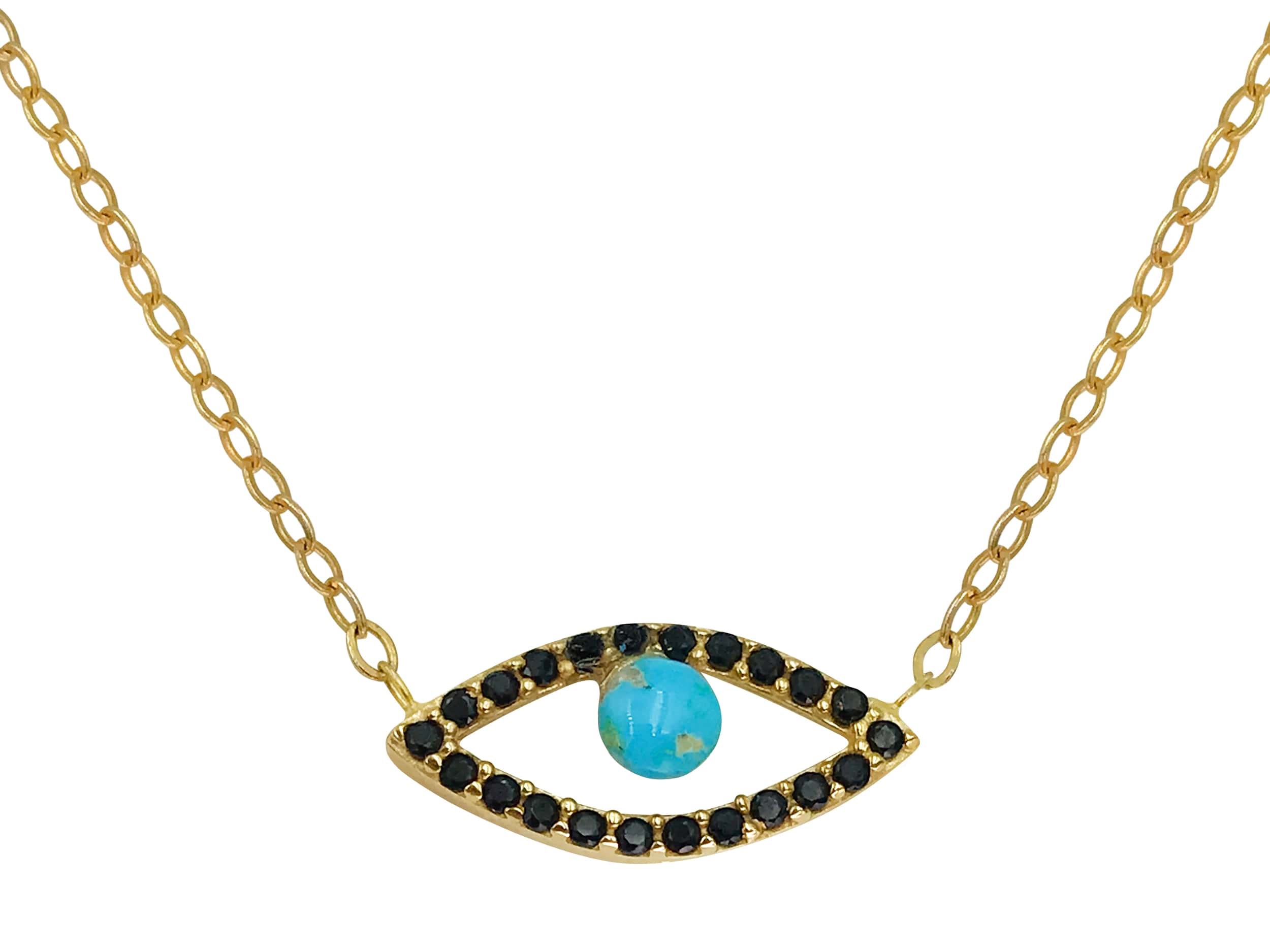
The belief in the evil eye—the idea that envy or ill will from others can bring harm or bad luck—has a long history in Persian culture. Amulets designed to protect against the evil eye are commonly worn to shield individuals from negative energy.
- Blue Eye Beads: Known as nazar, the blue glass bead shaped like an eye is one of the most widespread symbols of protection in Iranian jewelry. Worn as a pendant, bracelet, or ring, the blue eye bead is believed to deflect the negative energy of the evil eye and protect the wearer from harm.
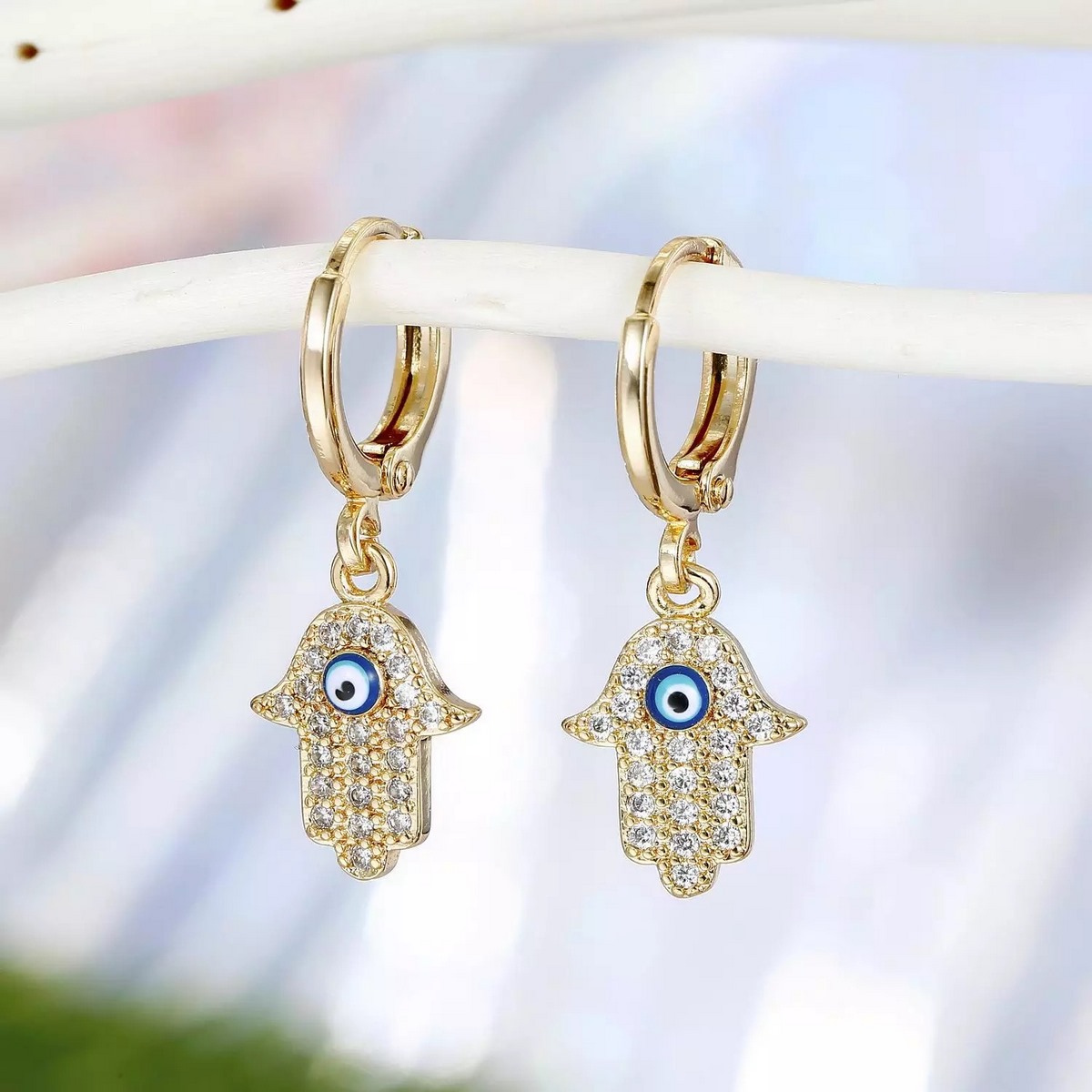
- Hand of Fatima (Hamsa): The Hand of Fatima, also called Hamsa, is another powerful symbol used as an amulet. Representing the hand of Fatima, the daughter of the Prophet Muhammad, the Hamsa is believed to bring protection, blessings, and good fortune to the wearer. Often seen in pendants or bracelets, it serves as a popular talisman in both Persian and Islamic traditions.
Symbols of Strength, Wisdom, and Guidance
In addition to protection, many amulets are designed to provide strength, wisdom, and spiritual guidance. These talismans often incorporate ancient Persian symbols or mythological figures that hold significant meaning in Iranian culture.
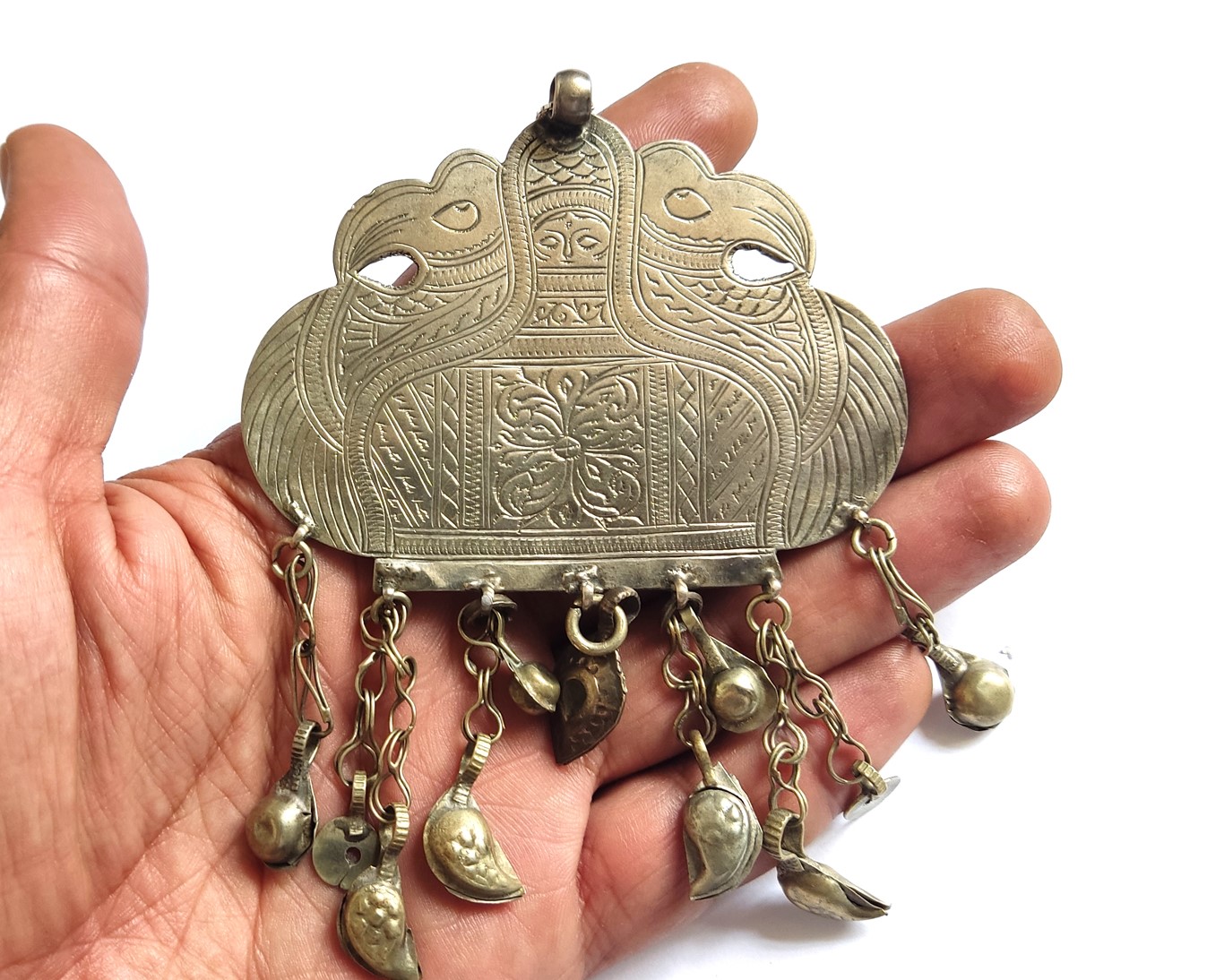
- Simurgh: The Simurgh, a mythical bird symbolizing wisdom, healing, and divine power, is often used in Persian jewelry as an amulet. Representing a protector figure in Persian mythology, the Simurgh is believed to offer spiritual guidance and protection against evil forces.

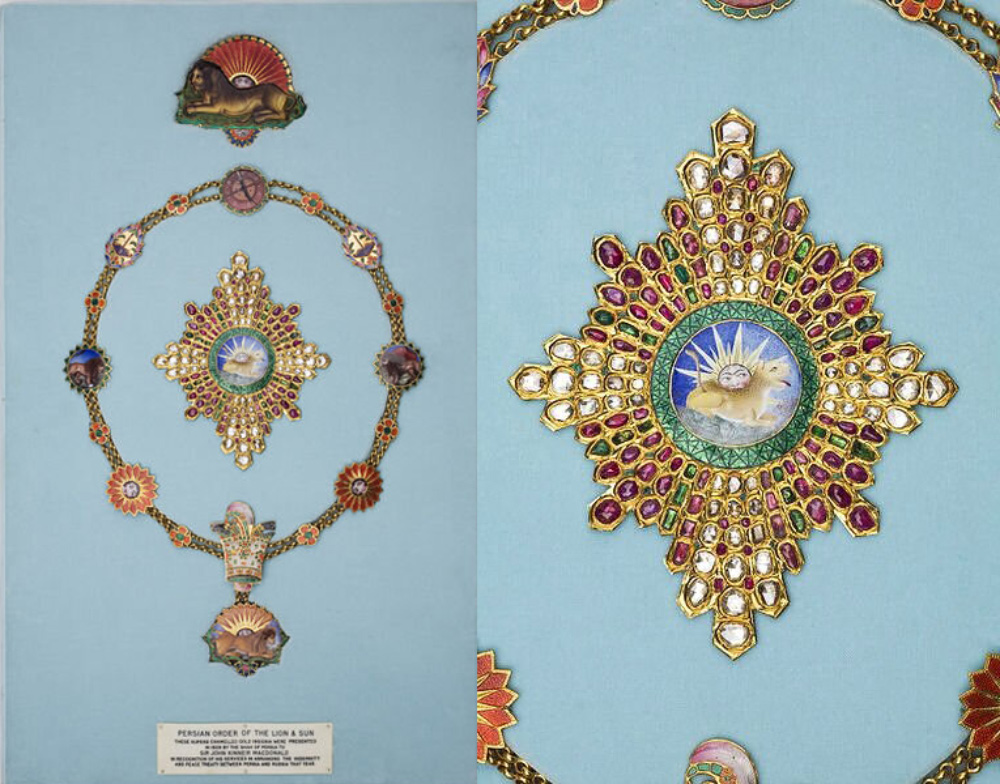
- Lion and Sun Symbol: The lion and sun emblem, which was historically associated with Persian royalty, represents strength, courage, and power. Amulets featuring this symbol are worn to invoke protection and victory in challenging situations.
3. Popular Types of Amulets and Talismans in Persian Jewelry
There are various types of amulets and talismans commonly found in Iranian jewelry, each with its symbolic significance and purpose. These amulets are typically worn as necklaces, bracelets, rings, or pendants, often passed down through generations as family heirlooms.
Gemstone Amulets: Turquoise and Carnelian
Certain gemstones have been revered in Persian culture for their spiritual and protective properties, and they are frequently used in amulet jewelry.
- Turquoise (فیروزه): Neyshabur turquoise, known for its vibrant blue color, is believed to protect the wearer from negative energy and bring good fortune. Worn in rings, necklaces, or bracelets, turquoise is a popular gemstone amulet in Persian jewelry, offering both aesthetic beauty and spiritual benefits.
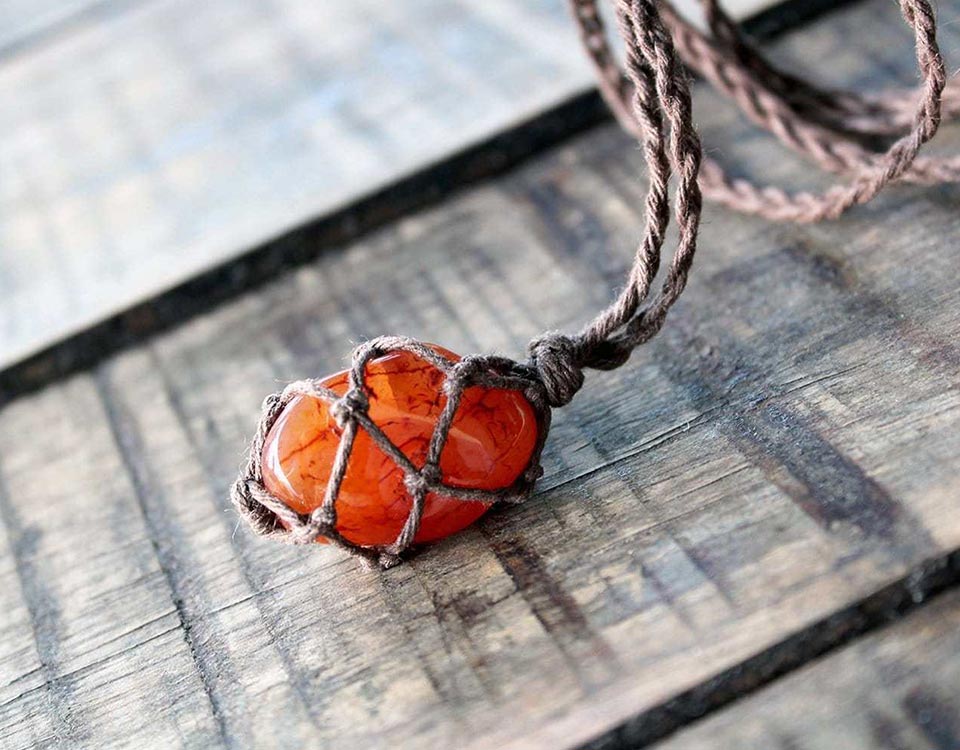
- Carnelian (عقیق): Carnelian, a reddish-brown stone, is associated with strength, courage, and protection from negative influences. Often set into rings or pendants, carnelian is worn as a powerful talisman to shield the wearer from harm and bring vitality.
Faravahar Pendant
One of the most iconic Persian talismans, the Faravahar pendant represents the principles of Zoroastrianism and embodies the ideals of good thoughts, good words, and good deeds. The Faravahar is often worn as a necklace or charm to bring spiritual strength and guidance, while also serving as a symbol of cultural identity for many Iranians.
- Spiritual Significance: The Faravahar is more than just a decorative symbol; it represents the wearer’s connection to Zoroastrian teachings and serves as a reminder to lead a moral and righteous life. Many people wear Faravahar pendants as a way to protect themselves from evil and maintain spiritual balance.
Hamsa (Hand of Fatima)
The Hamsa, or Hand of Fatima, is one of the most widely used talismans in Islamic and Persian culture. This symbol of an open hand with an eye in the center is believed to bring good fortune, health, and protection from evil. The Hamsa is often worn as a pendant, necklace, or bracelet, making it one of the most popular talismans in Persian jewelry.
4. Amulets and Talismans in Contemporary Iranian Jewelry
While the use of amulets and talismans in Iranian jewelry has ancient roots, modern Iranian designers are finding new ways to incorporate these traditional symbols into contemporary jewelry pieces. Whether through minimalist designs or bold, artistic expressions, these protective charms continue to resonate with people seeking both style and spiritual meaning.
Modern Interpretations of Traditional Amulets
Contemporary Iranian jewelry designers often create modern interpretations of traditional amulets, blending Persian symbols with sleek, elegant designs suitable for everyday wear. Minimalist amulet necklaces featuring subtle engravings of the Faravahar, Hamsa, or turquoise stones allow wearers to incorporate spiritual protection into their daily lives.
- Delicate Pendants: Simple, delicate pendants featuring traditional talismans such as the evil eye or Hand of Fatima are popular in modern Iranian jewelry, offering a minimalist yet meaningful design for everyday wear.
- Layered Necklaces: Some modern designers create layered necklaces featuring multiple amulets, combining protective symbols like the Hamsa, evil eye, and Faravahar to amplify the spiritual protection offered by the jewelry.
Personalized Amulets and Custom Designs
Many people seek to personalize their amulets by engraving meaningful phrases, names, or dates on their jewelry, creating a custom talisman that reflects their unique experiences or beliefs. Custom Iranian jewelry that features personalized amulets allows the wearer to carry both cultural and personal significance in a single piece.
5. The Enduring Power of Amulets in Iranian Culture
The use of amulets and talismans in Iranian jewelry has stood the test of time, serving as a reminder of the spiritual traditions that have shaped Persian culture for millennia. Whether worn for protection, guidance, or good fortune, these symbolic objects remain a powerful expression of Iranian identity and spirituality.
Today, Persian amulet jewelry continues to evolve, blending traditional symbols with modern design elements, allowing people to wear meaningful, protective charms that connect them to ancient wisdom while fitting seamlessly into contemporary fashion.
Conclusion: Amulets as Timeless Treasures
The role of amulets and talismans in Iranian jewelry is deeply rooted in spirituality, tradition, and cultural symbolism. From the Faravahar pendant representing divine guidance to the blue eye beads warding off the evil eye, these protective charms offer more than just beauty—they carry profound spiritual significance that continues to resonate with people today.
At LetsGoYelo, we offer a selection of Iranian jewelry that reflects the power and beauty of amulets and talismans. Whether you’re looking for a personalized piece or a traditional symbol of protection, explore our collection and find a piece that speaks to your heart and spirit.