The Significance of Rings in Persian Culture: A Deep Dive into Their Role in Persian History, Culture, and Rituals
Throughout Persian history, rings have held a place of deep cultural, symbolic, and religious importance. These small yet powerful objects have served not only as personal adornments but also as symbols of authority, spiritual protection, and social status. From the ancient Achaemenid Empire to modern Iran, Persian rings have played crucial roles in everything from royal ceremonies to marriage rituals, and they continue to hold cultural significance today.
In this post, we explore the multifaceted role of rings in Persian culture, tracing their significance through history, rituals, and symbolism in Persian society.
1. Rings in Ancient Persian History: Symbols of Power and Authority
In ancient Persia, rings were more than mere ornaments—they were symbols of royalty, power, and divine favor. During the reigns of the Achaemenid (550–330 BCE), Parthian (247 BCE–224 CE), and Sassanid (224–651 CE) empires, rings were used by kings, nobles, and high-ranking officials as a sign of authority and legitimacy.
Signet Rings and Royal Authority
One of the most prominent uses of rings in ancient Persia was as signet rings, which featured an engraved emblem or inscription that served as a seal of authority. These rings were worn by kings, noblemen, and government officials and used to seal official documents by stamping the ring’s emblem into wax. The use of signet rings ensured the authenticity of royal decrees and communications.
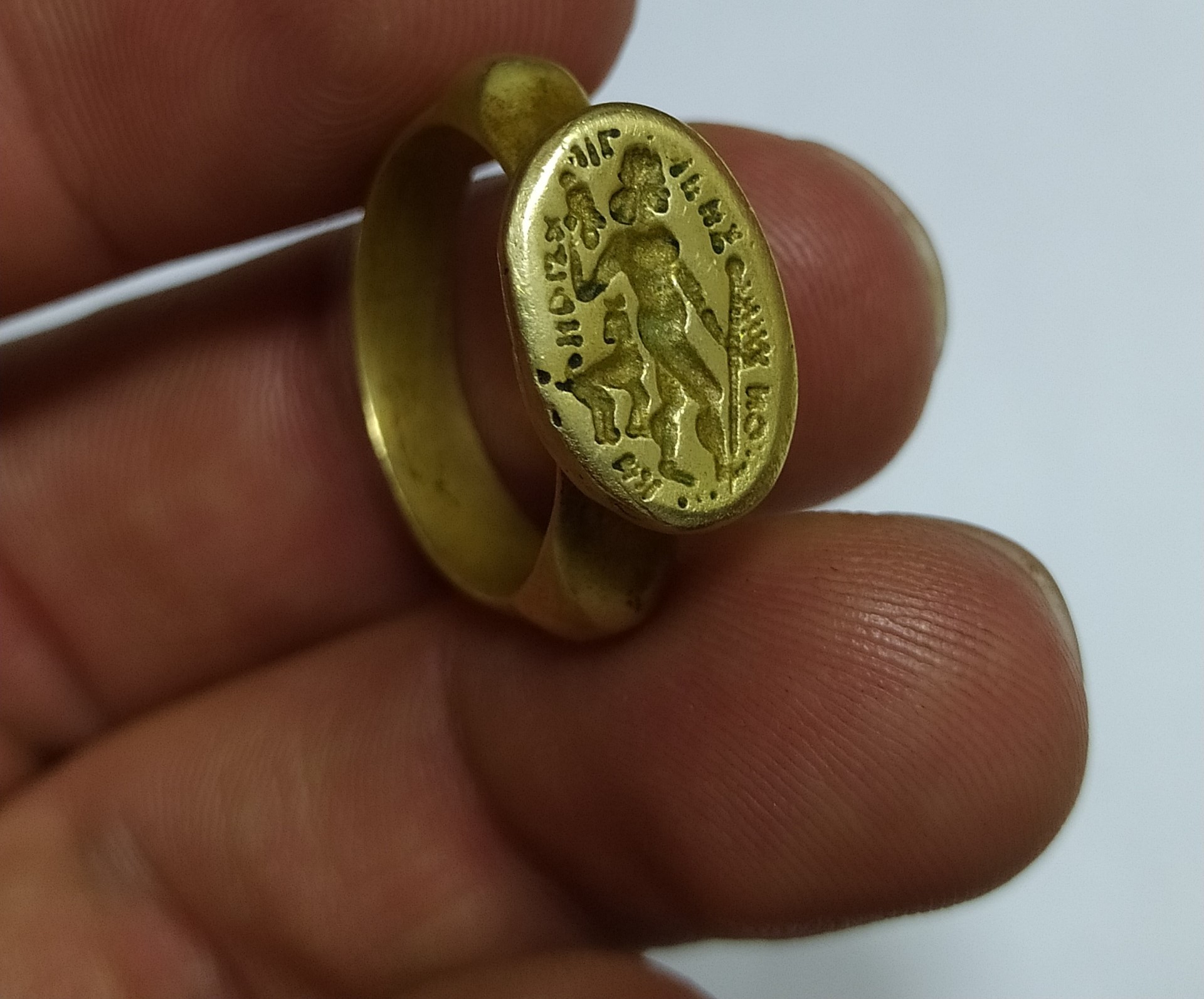
- Achaemenid Kings: Persian kings, such as Cyrus the Great and Darius I, were known to wear gold signet rings engraved with Zoroastrian symbols or royal insignias. These rings symbolized their divine right to rule and were used in administrative processes as proof of royal approval.
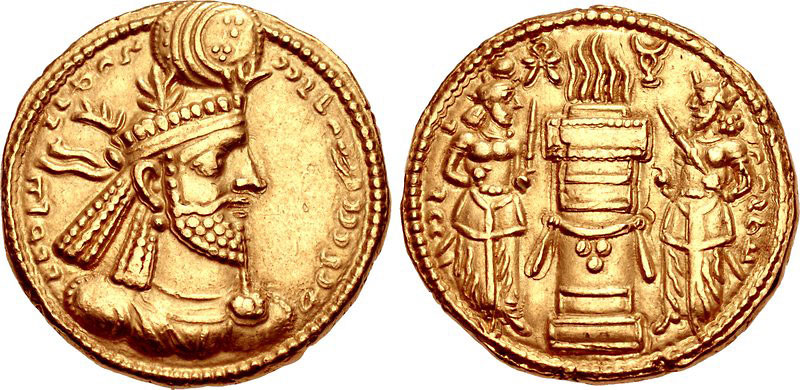
- Sassanid Emperors: During the Sassanid Empire, kings wore elaborate signet rings engraved with images of themselves or Zoroastrian fire altars, symbolizing their close connection to the divine and their role as protectors of the Zoroastrian faith. These rings were often made of gold or silver and were worn as a sign of their rulership.
Rings as a Sign of Social Status
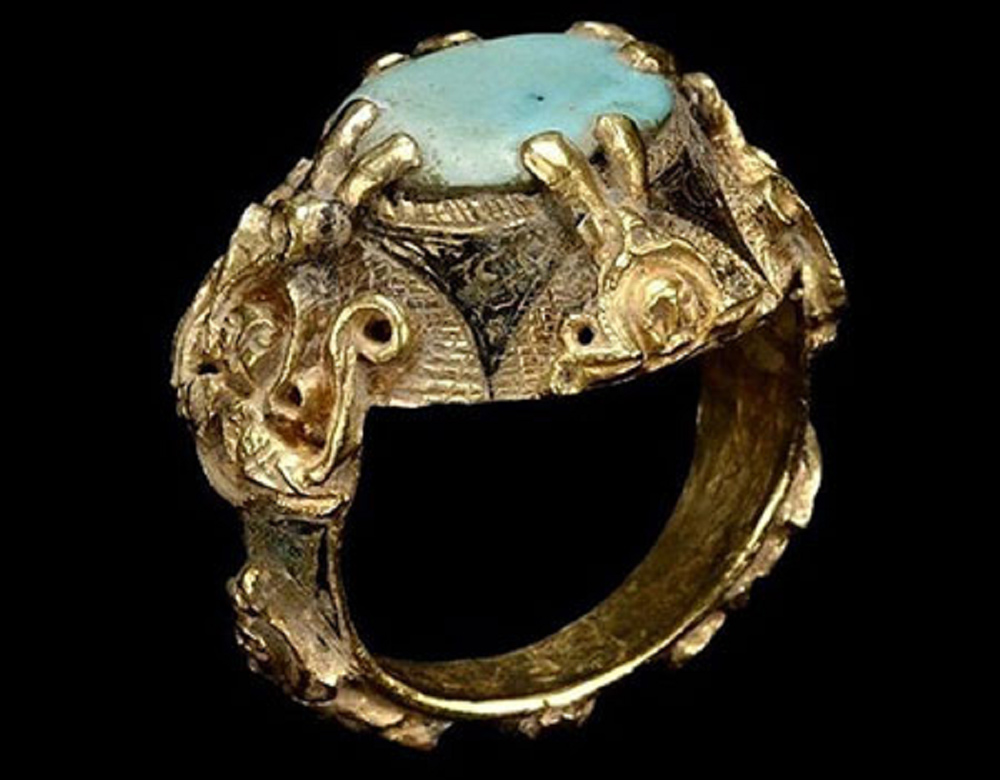
Rings were also used to signify social rank and wealth in ancient Persian society. The materials used to craft the rings—such as gold, silver, and precious gemstones—reflected the wearer’s status and influence. Wealthy individuals adorned themselves with rings set with turquoise, carnelian, garnet, and lapis lazuli, with each stone carrying specific symbolic meanings related to protection, prosperity, and spiritual power.
2. The Spiritual and Religious Significance of Rings
In addition to their political and social functions, rings in Persian culture have long been associated with spirituality and protection. This connection is deeply rooted in Zoroastrianism, Persia’s ancient religion, which influenced the use of sacred symbols in ring designs and their role in religious rituals.
Zoroastrian Rings: Protection and Spiritual Guidance
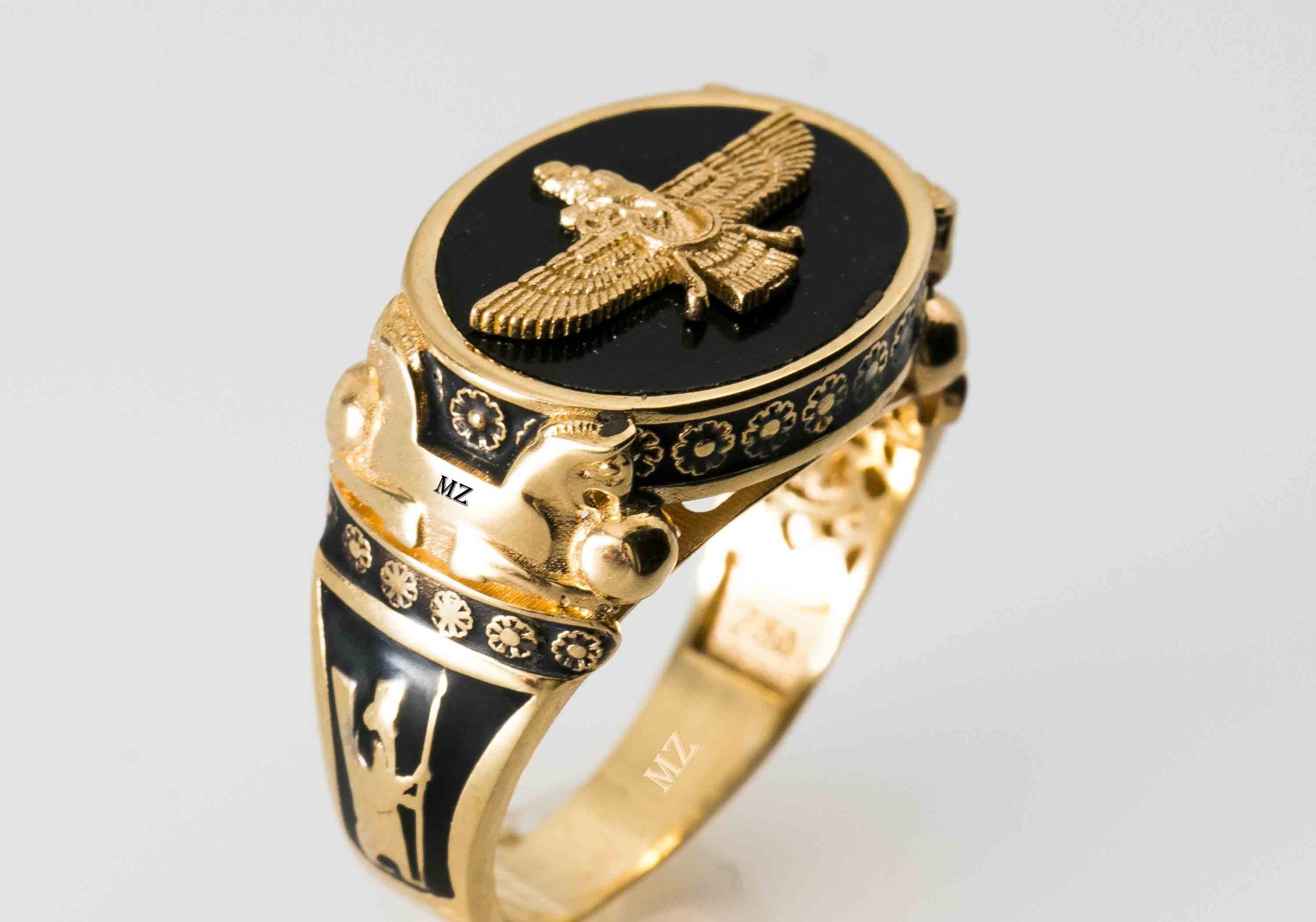
For centuries, Zoroastrians used rings as spiritual talismans. Rings featuring the Faravahar, a central Zoroastrian symbol representing the eternal soul and divine guidance, were worn by Zoroastrians to protect against evil and ensure a connection to the divine.
- Faravahar Rings: The Faravahar was often engraved onto rings as a protective amulet, believed to offer spiritual guidance and support the wearer’s moral journey in life. These rings were particularly popular during the Sassanid era when Zoroastrianism was the official religion of the Persian Empire.
- Religious Amulets: In addition to the Faravahar, rings featuring Zoroastrian prayers or fire symbols (a representation of purity and the eternal flame) were used as protective amulets. Such rings were believed to ward off evil spirits and negative energy, bringing blessings to the wearer.
Islamic Influence on Persian Rings
After the Arab conquest of Persia in the 7th century, Islam became the dominant religion, and Islamic symbols and inscriptions began to appear on Persian rings. Calligraphy, particularly the engraving of Quranic verses and religious phrases, became a popular feature in Islamic Persian rings.
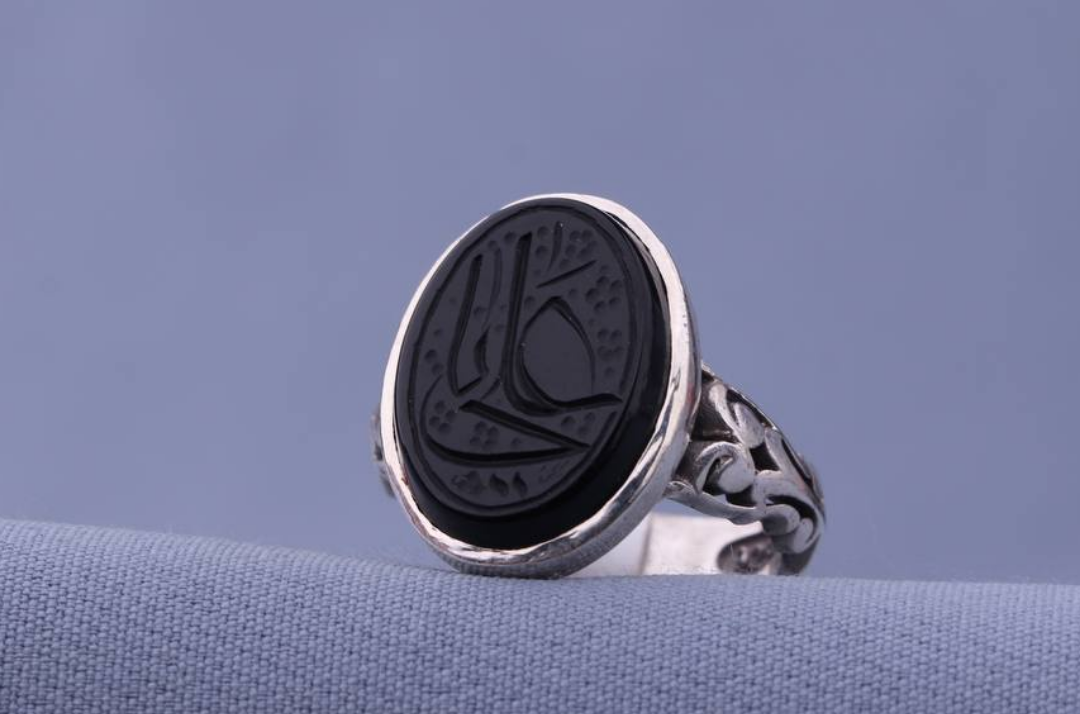
- Quranic Inscriptions: Rings engraved with phrases such as “Bismillah” (In the name of God) or “Alhamdulillah” (Praise be to God) were worn as expressions of faith and as symbols of divine protection. These rings were often made from silver, following Islamic tradition.
- Imam Ali’s Ring: One of the most significant Islamic rings in Persian culture is associated with Imam Ali, a key figure in Shia Islam. Rings engraved with his name or symbols related to him are worn by Shia Muslims as a sign of devotion and protection.
3. Rings in Persian Wedding and Marriage Rituals
In Persian culture, rings have long played an important role in marriage rituals and are central to the symbolism of love, commitment, and fidelity. The tradition of exchanging rings in Persian weddings dates back centuries and continues to be an essential part of modern Iranian wedding ceremonies.
The Engagement Ring (Halkaye Namzadi)
The tradition of giving an engagement ring as a symbol of the couple’s commitment dates back to ancient Persia. In contemporary Iranian culture, the Engagement ring is an integral part of the Namzadi (engagement) ceremony, where the groom presents the bride with a ring to symbolize their upcoming union.
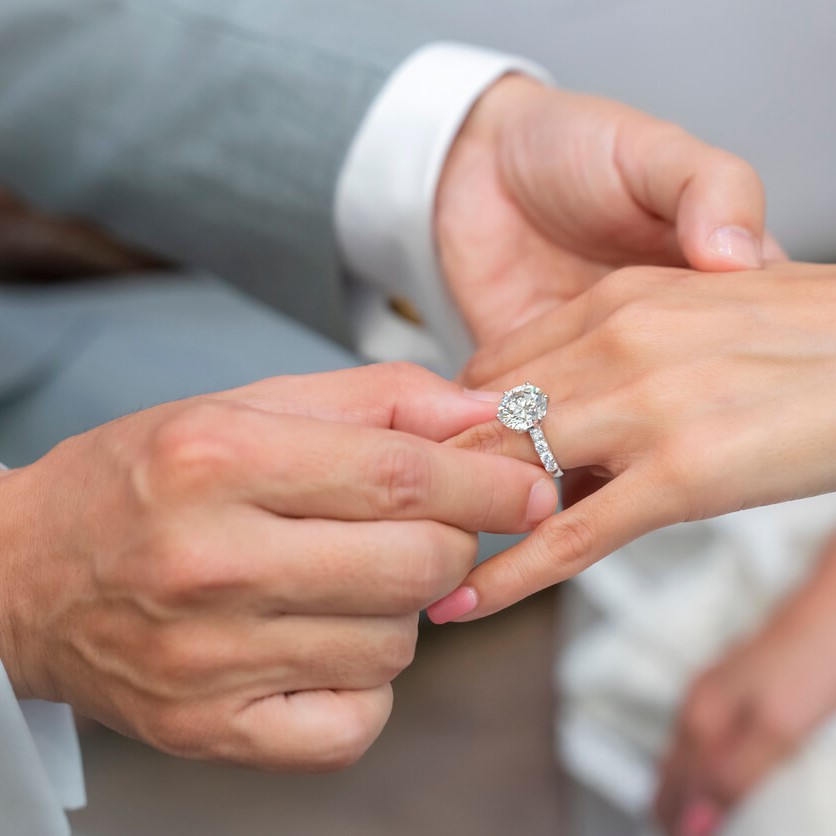
- Style of Rings: Traditionally, engagement rings are often made of gold or silver and may feature precious gemstones such as diamonds, rubies, or turquoise. The design often includes Persian floral motifs or engraved calligraphy, reflecting the couple’s cultural heritage.
- Symbolism: The giving of the engagement ring signifies loyalty and fidelity between the couple, marking the beginning of their formal commitment to each other.
The Wedding Ring (Halkaye Aroosi)
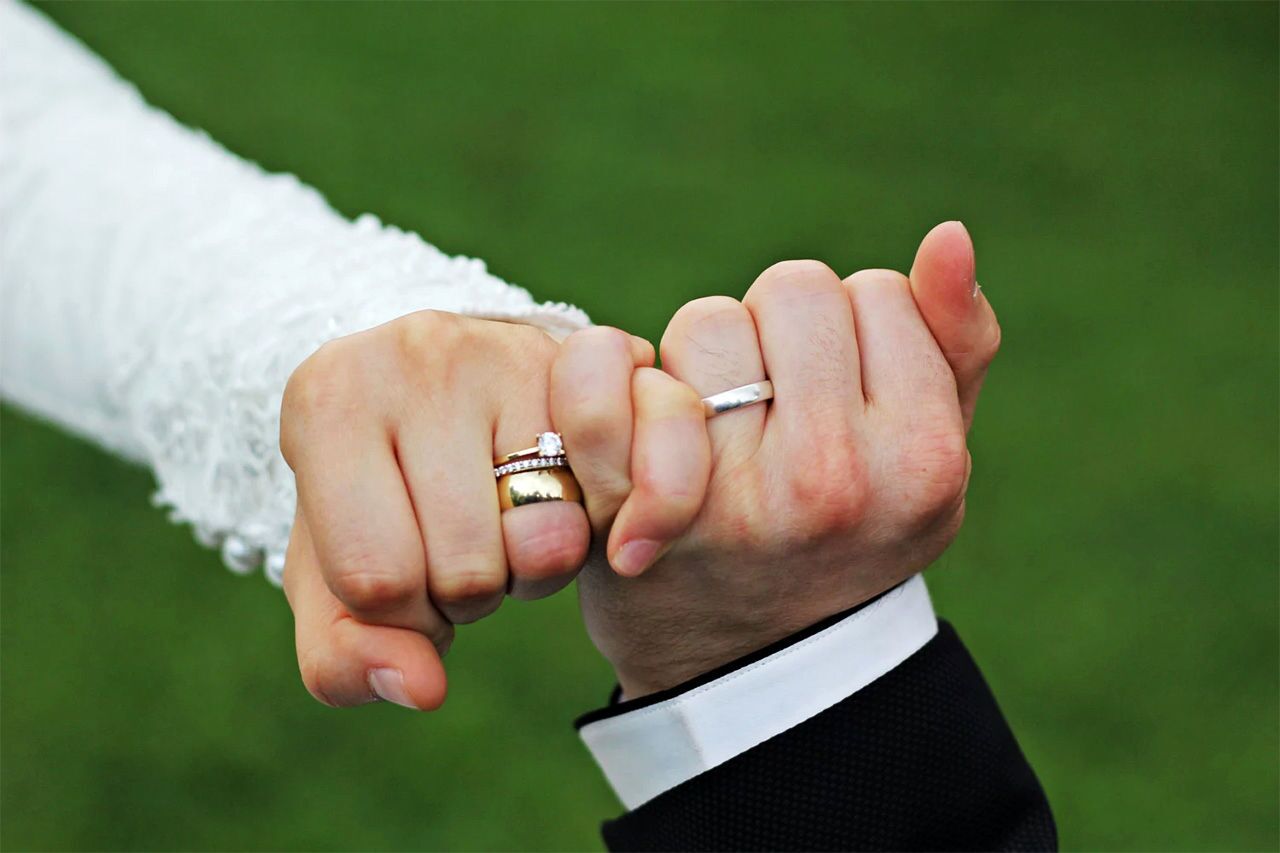
The exchange of wedding rings during the Aroosi (wedding) ceremony symbolizes the eternal bond between the bride and groom. In Persian culture, the round shape of the ring represents infinity and the never-ending circle of love.
- Gold and Silver Wedding Rings: Gold is traditionally favored for women’s wedding rings, while silver rings are more common for men, especially by Islamic customs. These rings are often simple and elegant, though they may include personal engravings or poetic inscriptions.
- Ring Ceremony: The ring ceremony takes place during the wedding, where the bride and groom exchange rings in front of their family and friends, symbolizing their unity and lifelong partnership.
4. Rings in Persian Literature and Mythology
Rings are also featured prominently in Persian literature, poetry, and mythology, where they are often symbolic of power, love, or fate. Throughout the ages, Persian poets and storytellers have used the imagery of rings to explore themes of devotion, destiny, and transformation.
Rings in Persian Poetry
In Persian poetry, particularly in the works of famous poets such as Rumi, Hafez, and Ferdowsi, rings are often used as metaphors for eternal love and the union of souls. The circular form of the ring symbolizes wholeness and the cyclical nature of life and love.
- Rumi’s Metaphor of the Ring: The Sufi poet Rumi frequently used the image of the ring to describe the infinite nature of divine love. In his poems, the ring often represents the soul’s connection to God, with the ring’s continuous loop symbolizing the endless journey of spiritual growth.
- Ferdowsi’s Shahnameh: In Ferdowsi’s Shahnameh (The Book of Kings), an epic poem that chronicles the history of Persian kings, rings often appear as symbols of royal power or magical transformation. Heroes and kings are given rings as signs of their authority or as tokens of their destiny.
Magical Rings in Persian Mythology
In Persian mythology, magical rings are a recurring motif, often granting the wearer special powers or acting as a talisman for protection. These rings are believed to connect the physical world with the spiritual or magical realms, granting the bearer insight, power, or protection from harm.
- Zal’s Ring in Shahnameh: One famous myth from Ferdowsi’s Shahnameh involves the hero Zal, who receives a magical ring from the Simurgh, a mythical bird. The ring grants him protection and guidance throughout his life’s adventures, symbolizing the divine favor and magical influence that rings can carry in Persian culture.

5. The Modern Significance of Rings in Persian Culture
In modern Iranian society, rings continue to hold cultural and symbolic importance, often blending traditional motifs with contemporary design. While many Iranians still wear rings as spiritual talismans or symbols of love, today’s jewelry designs often reflect both Persian heritage and global trends.
Contemporary Persian Rings
Modern Persian rings often incorporate traditional elements such as Persian calligraphy, floral patterns, and geometric motifs, while also embracing minimalist or abstract designs. Many jewelers craft rings using locally sourced gemstones like Neyshabur turquoise or Iranian agate, continuing the legacy of Persian gemstone artistry.
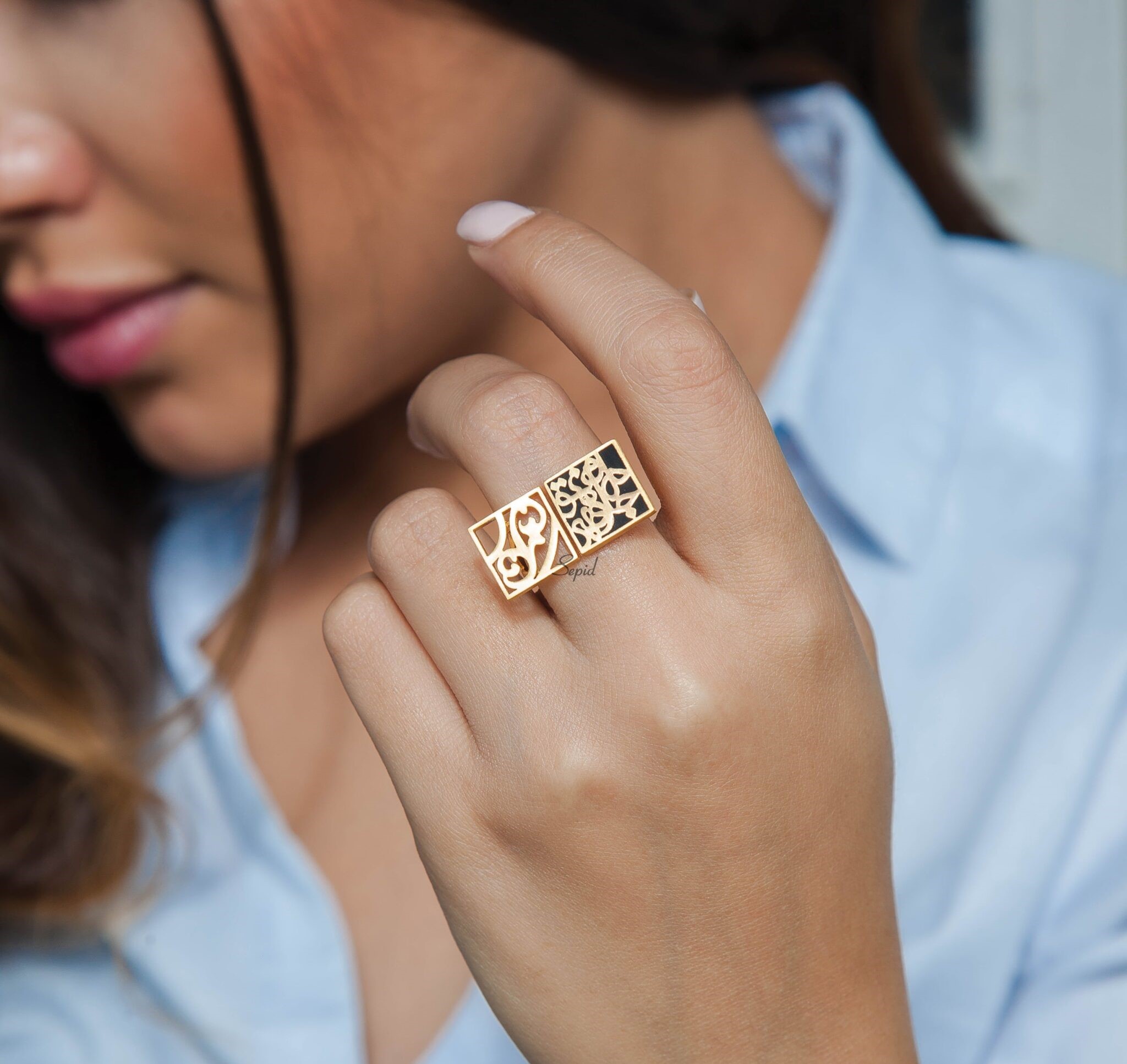
- Calligraphy Rings: Rings engraved with Persian poetry or the names of loved ones are popular in modern Iran, offering wearers a meaningful and personal connection to their cultural roots.
- Turquoise Rings: As turquoise is considered a protective stone in Persian culture, many people wear turquoise rings for spiritual protection and good luck, especially during important life events such as engagements or weddings.
Conclusion: The Timeless Role of Rings in Persian Culture
From ancient royal signet rings to spiritual talismans and modern wedding bands, rings have long held a special place in Persian culture, symbolizing authority, love, protection, and divine favor. Whether worn by kings as a symbol of power or by ordinary people seeking spiritual guidance, Persian rings continue to reflect the deep cultural and historical significance that has endured for millennia.
At LetsGoYelo, we celebrate the rich tradition of Persian rings with a curated selection of handcrafted pieces that honor the history and symbolism of this cherished cultural icon. Explore our collection and discover the timeless beauty of Persian jewelry today!